

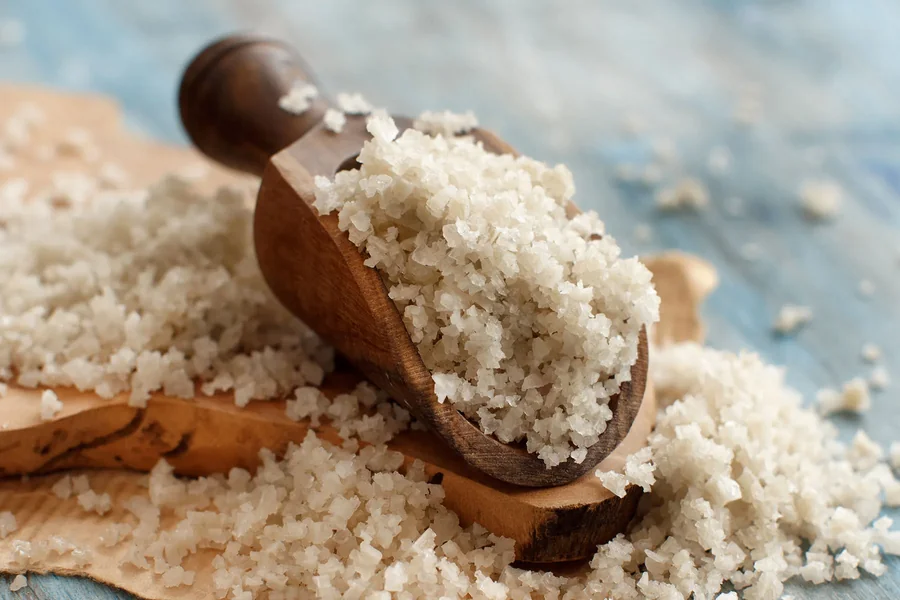
The Celtic salt has gained a lot of popularity with individuals wishing to find an alternative to highly processed table salt that can be more natural. It is easy to recognize due to its coarse texture, grayish color, and the methods of its traditional harvesting. It is also popular among many because it is believed to have more minerals than regular refined salt.
But the appearance of Celtic salt is not all. It is also a major source of sodium just like other forms of salt and therefore should be taken sparingly. Simultaneously, its taste and consistency can make it an essential addition to the common cooking.
Knowing the origin of this sea salt, its differences with table salt and its possible benefits may help you make a decision whether it should find its place in your kitchen or not.
What Is Celtic Salt?
Celtic salt is a variety of sea salt that is normally accumulated in seashore salt ponds. It is often linked with the coastal regions of Brittany in France, where the time-honored salt-making techniques have been in operation.
This salt is not usually highly processed as compared to normal table salt. It can be gathered in seawater by evaporation and it contains water which makes it slightly damp in texture. It is a light beige or gray in its natural state owing to the minerals and elements that are within it during harvesting process.
One of its most noticeable features is its coarse texture. The crystals are larger and less homogeneous than the crystals that are present in finely ground table salt. This is important in that it is also a finishing salt when you desire a distinct texture on your food.
Celtic salt is occasionally sold as an unrefined or mineral salt. Although it may have some traces of certain minerals like magnesium, calcium and potassium, they are usually not in large quantities to render it a significant nutritional source of these nutrients.
The main component is still sodium chloride. This matters since the body requires sodium in proper functioning of nerves, muscle movement and body fluids. Nonetheless, excess sodium may be an issue when it comes to general health.
That is why its natural appearance does not imply that you can consume limitless quantities of it.
Potential Benefits of Celtic Salt
The less processed nature of the Celtic salt is one of the reasons why people prefer the salt. In traditional harvesting, there is no need to refine the salt with the same process applied to a variety of table salt. This can serve to maintain its typical moistness, feel and trace minerals.
Its flavor is another advantage. Cookers have discovered that rough sea salt is more complex or enjoyable than their usual finely ground salt. Since the crystals are bigger you can also apply a different amount when seasoning food, depending on how you measure it.
The other attractive characteristic is its texture. A little pinch sprinkled over roasted vegetables, eggs, salads, grilled fish or home prepared bread can give a slight crunch. This is especially appropriate as a finishing ingredient and not as something that you automatically add in large quantities when you are cooking.
Salt: Celtic salt can also be interesting to those who consume minimally processed food. The old way of harvesting and the look of nature are compatible with the cooking methods that emphasize minimal ingredients.
Nonetheless, we should not confuse these practical benefits with some of the more robust health claims that we have been able to explore on the Internet.
It is alleged that such form of salt has the ability of enhancing hydration, balancing electrolytes, aiding in digestion, hormone regulation or giving in depth quantities of vital minerals. Such statements are exaggerated. Though sodium and other electrolytes are significant to the body, consuming additional salt will not necessarily be an improved method of aiding these processes.
Specifically, the salt addition to water is occasionally touted as being a special form of hydration. Normal water and a balanced diet are sufficient sources of hydration and electrolytes to most healthy individuals. Individuals who lose large amounts of fluids due to vigorous physical activity, sickness, excessive sweating, etc. might have their own requirements and should take into account the electrolyte products or consultation with specialists.
The largest practical advantage of Celtic salt might thus be taste, texture and traditional manufacture as opposed to a particular nutritional impact.
Celtic Salt vs Regular Table Salt
The main difference between Celtic salt and regular table salt is how they are produced and processed.
Table salt is very refined as a rule. It is typically refined to form small, uniform crystals and can include additives that can inhibit clumping. Most table salts are also iodized (iodine is added to prevent the lack of iodine).
Celtic salt is less refined and is more moist. It has naturally variable color and bigger crystals. It can also have trace minerals which are diminished or eliminated when refining table salt.
However, these differences do not imply that one kind of salt is necessarily healthy and the other is unhealthy.
Both provide sodium. In the sodium-consumption perspective, the point of greatest influence is the amount one takes and not the color of the salt, be it pink, gray, white, coarse or fine.
Another significant difference is to consider: iodine.
Normal thyroid activity requires iodine, and iodized salt may become a valuable source of this mineral to certain individuals. Celtic salt is not usually a good alternative to iodized salt unless iodine is supplied by other sources such as other foods or supplements.
It does not imply that you should give up on sea salt. Rather, it is better to consider your general diet. Iodine can be found in seafood, dairy products, eggs, and some others though in varying amounts.
When you consume Celtic salt only and seldom consume foods with a lot of iodine it may be worth while to discuss your level of iodine with a professional medical practitioner.
Finally, the most appropriate decision is based upon your needs in nutrition and your taste. You may replace it with Celtic salt as a source of flavor and texture and be aware that your overall diet is balanced to supply your body with all the nutrients.
How to Use Celtic Salt in Everyday Cooking
Most of the same ways of using sea salts can be applied to Celtic salt. Since it usually contains big and wet crystals, however, you might wish to change the method of measuring it.
The simplest solution is to sprinkle it over and use it as a finishing salt. Top roasted potatoes, vegetables, grilled chicken, fish, avocado toast, eggs or fresh salads. The crystals do not need to have a large number since they can provide texture.
It can also be used when making soups, and sauces, pasta, rice, and vegetables. In case of very large crystals, it may be convenient to crush them a bit to make the distribution of the salt uniform.
Clovis: When baking, be attentive to the technique used to measure. The quantity of sodium present in a teaspoon of coarse salt and a teaspoon of fine salt may vary with the size of the crystals and the extent to which the salt beds into the spoon. When a recipe calls on a specific kind of salt, it may be preserved in its way in order to retain the desired flavor.
As an option finishing ingredient, Celtic salt can also be stored on the table. This enables individuals to add their own flavor to food rather than a lot of food during preparation.
Storage is simple. Since this salt has the ability to retain moisture naturally then store it in a clean container with a tight lid. An unwanted water can be avoided using a dry spoon so that no moisture can enter into the container.
There should not be an aim to put in more salt because it is being sold as a natural product. Rather, eat just enough to enjoy what you eat without forgetting your total sodium diet.
Read More: Low Calorie Snacks That Are Filling, Tasty, and Easy to Make
Final Thought
The Celtic salt is considered unique due to its traditional making, natural look, wet touch, and unique crystals. These features help position it as a desirable option among cooks who embrace the use of little processed foods and desire a tasty finishing salt.
Simultaneously, one should not consider it as a miracle health food. This does not alter the fact that its trace minerals are mostly salt and thus a source of sodium. It is better to use it carefully, than merely to prefer one kind of salt to another.
In an ordinary cooking, Celtic salt could serve as an enjoyable taste to a well-balanced meal. Take in small quantities, watch total sodium intake and ensure that nutrients like iodine are obtained in the right proportion through proper diet. In this manner, it has the potential to infuse homely dishes with flavor and texture, without having to make over-the-top health claims.
FAQs
Is Celtic salt healthier than regular table salt?
Not necessarily. Celtic salt is less refined and may contain trace minerals, but it is still primarily sodium chloride. Its main advantages are its texture, flavor, and traditional production rather than a dramatically different nutritional profile.
Does Celtic salt contain iodine?
Natural sea salts such as Celtic salt are generally not reliable sources of iodine unless iodine has been specifically added. If you depend on salt for iodine, check the product label and consider your overall diet.
Can Celtic salt help with hydration?
Sodium plays an important role in fluid balance, but adding extra Celtic salt to water is not necessary for routine hydration for most healthy people. Special electrolyte needs can occur during heavy exercise, significant sweating, or illness.
Can you cook with Celtic salt?
Yes. It can be used for seasoning vegetables, meat, seafood, soups, sauces, grains, and many other foods. Its coarse texture also makes it useful as a finishing salt.
Why is Celtic salt gray?
Its grayish color comes from the traditional harvesting process and the natural minerals and particles associated with the salt ponds. The exact color can vary between products.
Is Celtic salt low in sodium?
No. Celtic salt should not be considered a low-sodium food. Like other salts, it can contribute a significant amount of sodium to your diet.
How should Celtic salt be stored?
Store it in a clean, dry, airtight container. Because it may retain more moisture than refined table salt, keeping the container closed can help maintain its texture.