
European car keys range from basic metal keys to transponder keys, laser-cut keys, tibbe keys, smart keys, and remote key fobs. Their replacement costs vary widely depending on the vehicle, key technology, and programming requirements.
Dallas is known for long commutes, busy roads, and a strong car culture, making reliable vehicle access especially important. From downtown traffic to the sprawling suburbs, the city is also home to many European luxury and performance cars.
Hence, when the car key stops working, understanding the key type and likely replacement cost can make the situation much easier to handle. For owners researching European car key replacement in Dallas, knowing which type of key they have is a useful first step. This article explains clearly about the types of keys and their replacement costs.
Common Types of European Car Keys
Modern European vehicles often use advanced security systems rather than simple metal keys. A replacement may therefore involve cutting a physical key, programming a transponder, or pairing an electronic fob with the vehicle.
Let’s understand the different types of European car keys along with their replacement cost.
- Traditional Metal Keys: Older European vehicles may use standard mechanical keys without electronic components. They are generally the least expensive to replace, with costs typically around $50–$150, depending on the vehicle and key blank.
- Laser-Cut Keys: Laser-cut, or sidewinder, keys have a more precise and complex cut than traditional keys. They are commonly found in newer BMW, Mercedes-Benz, Porsche, etc., and require specialized cutting equipment. This European car key replacement usually costs about $100–$250, depending on the make, model, and whether programming is also required.
- Tibbe Keys: Tibbe keys use a distinctive cylindrical design with cuts around the key rather than along a conventional flat blade. They have been used particularly in Ford and Jaguar models. Because specialized equipment may be required to cut them accurately, replacement costs can generally range from $100 to $250.
- Transponder Keys: A transponder key contains an electronic chip that communicates with the vehicle’s immobilizer. Simply cutting a key that fits the ignition may not be enough; the chip must also be programmed. Replacement commonly costs $100–$300, depending on the vehicle.
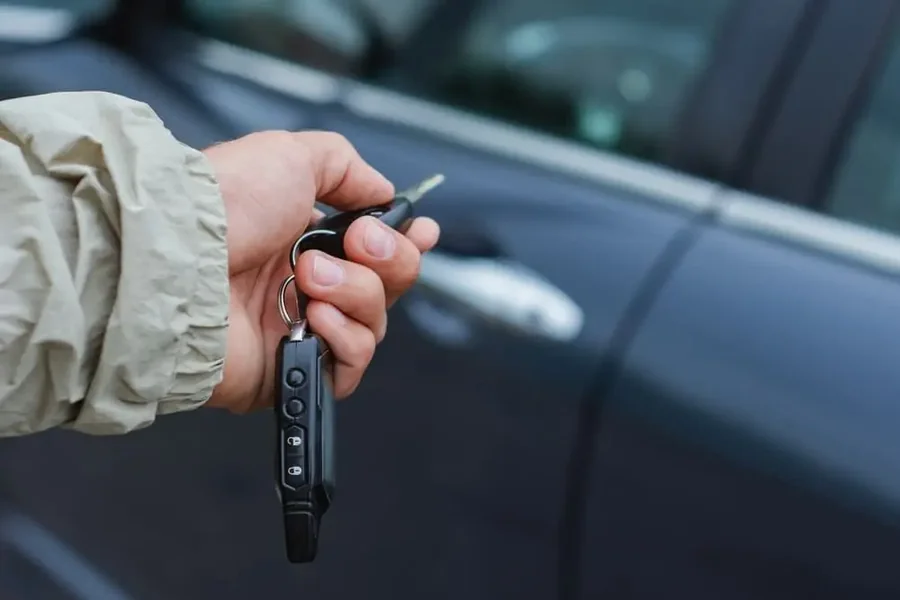
- Remote Key Fobs: Remote keys combine a physical key or emergency blade with buttons for locking and unlocking the vehicle. Some also include a transponder for starting the car. Replacement costs are often around $150–$400, depending on the electronics and programming required.
- Smart Keys and Keyless Entry: Smart keys allow drivers to unlock and sometimes start their vehicle without physically inserting a key. These systems use sophisticated electronic communication between the key and vehicle. Replacement can cost $250–$600 or more, particularly for European luxury models.
What Determines Replacement Cost?
The final price can vary based on:
- Vehicle make, model, and year
- Type of key and security system
- Whether programming is required
- Whether the original key is available
- Whether all keys have been lost
- Equipment needed to cut or program the replacement
Key Points to Remember
- Traditional metal keys are generally the cheapest European car keys to replace.
- Laser-cut and Tibbe keys require specialized equipment, which can increase replacement costs.
- Transponder keys and remote key fobs often need programming to work correctly with the vehicle.
- Smart key replacement is usually more expensive because of advanced security and keyless entry technology.
- European car key replacement in Dallas costs depend on the vehicle model, key type, programming needs, and whether the original key is available.