

This is a question that many tourists, particularly those intending to go on their first low-budget trip, often ask themselves: What Is It Like To Stay In A Hostel? Although hotels used to be the most common form of accommodation, hostels have gained popularity with the travelers who are in need of affordability, flexibility, and the chance to meet people worldwide.
The thought of lodging in a hostel can be thrilling to some people and frightening to others. Imagination of many first time travelers is overcrowded rooms, noisy rooms or lack of privacy. Although certain hostels are social and loud, current hostels tend to have numerous types of accommodation with diverse facilities, which meet various traveling tastes.
Modern day hostels are a lot more multi-racial than it would seem. Some emphasize vibrant social environments, and others on comfort, privacy, and private areas. By learning more about how the hostels work, and what you can reasonably expect, you can eliminate all doubt and get a more enjoyable experience.
Hostels are a great way to travel, and they can be considered a distinct experience, unlike staying in a hotel because a hostel is a place a person can visit as a single traveler, a student, and a backpacker, or just as someone who wants to see a new place at a reasonable price.
Understanding How Hostels Work
In their fundamental form, hostels are a type of accommodation which offers cheap accommodation to tourists.
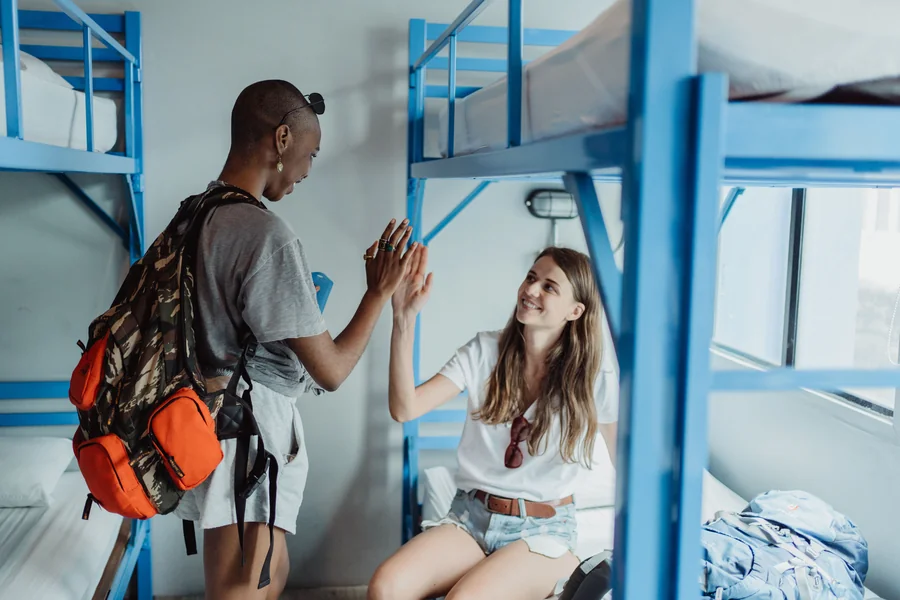
The most distinguishable aspect of a hostel is the shared dorm room. You do not hire a room all to yourself, but usually rent a bed in a room where others are staying. Depending on the property, a number of four to twenty or more beds may be available in the dormitories.
Nevertheless, some of the hostels in modern times have also private rooms. This gives visitors greater privacy yet still being able to use the shared facilities and social environment.
Hostels life is a central part that has common areas. Such common areas can consist of lounges, kitchens, dining, outdoor patios, coworking or recreation rooms.
Hostels tend to promote socialisation among lodgers. Most of them have social events, walking tours, game nights, group dinners and other activities that are meant to make the travelers bond.
Since guests usually belong to other countries and other cultures, hostels tend to provide experiencing cultural exchange and making new friends.
Hostels differ with many traditional accommodations as there is the element of social interaction and affordability.
The Social Side of Staying in a Hostel
The social climate is one of the largest motivations of travelers to stay at a hostel.
Hostels, unlike hotels, tend to create interaction since the guests can be quite private and even independent. By having common areas, one can easily initiate discussions, share travel experiences and socialize with individuals worldwide.
Hostels are one such establishment that is frequently attractive to solo travelers since they minimize the sense of loneliness. It is typical to find other travelers who are interested in visiting the same sites, taking tours, or having meals together.
Most of the hostels have activities that are specially geared towards getting the guests to socialize. These can be pub crawls, custom-made tours of the city, cooking lessons, movie nights or guided tours.
Friendships in hostels are not necessarily confined within the hostel. Travelers can keep on exploring with each other or remain in touch in their visits or even reunite in other destinations.
Naturally, the participation will be voluntary. Visitors who want to be left alone will have an opportunity to relax during their stay without the pressure to interact.
One of the factors that make hostels very popular with such a diverse group of travelers is the balance between community and individual choice.
The social experiences add up to a significant proportion of the experience of many people on the journey.
Rooms, Facilities, and Daily Life
Day to day life in a hostel may differ according to the property style and size.
Bunk beds and storage lockers, reading lamps, and electric sockets are common in dorm rooms. Certain contemporary hostels have privacy curtains that assist to make a personal space in common rooms.
The special rooms provide another option to travelers who may wish to enjoy extra privacy yet enjoy the hostel facilities.
The type of room and facility can either be shared or private between the bathroom and others. Numerous hostels are very clean especially in the tourist destinations.
It is also typical of communal kitchens. These units will enable customers to cook their own meals, which can considerably save the cost of travel.
There are often laundry spaces and the more distant trips are made convenient.
Most of the hostels offer free Wi-Fi, workspaces, storage of luggage, and travel assistance. Others even provide cafes, bars or coworking spaces inside the estate.
Depending on the target audience and the place, the atmosphere may be relatively quiet and calm or active and vibrant.
Before making a booking, it may be useful to know about the particular style of a hostel, so that you can make sure it meets your expectations.
Advantages of Choosing a Hostel
Hostels have a number of advantages which are not confined to the reduced costs of accommodation.
One of the largest benefits is affordability. The tourists are able to pay only a fraction of the cost of the hotels close to central locations.
The social world gives the chance of interacting with people of other cultures and backgrounds. This feature is particularly useful to individual travelers.
Shared kitchens enable the guests to save money on the cost of food through preparing their own meals.
Various hostels are also in convenient locations near transport, sightseeing spots, eateries as well as the night life.
Travel information is another benefit. The employees in a hostel can also be quite aware of the local sites of interest, means of transportation and some special secret spots that one may fail to notice.
Elasticity is desirable too. Hostels often cater to many different kinds of travelers including both long-term travelers such as backpackers and short term travelers visiting specific cities.
Affordability, convenience, and community form a special experience that most travelers find rewarding.
These benefits contribute to the popularity of hostels around the globe.
Potential Challenges and How to Prepare
Despite the numerous advantages that come with hostels, they are not devoid of problems.
It can be privacy, which is mostly the biggest adaptation of first-time guests. It may be strange to share a room with strangers particularly to travelers who are used to having their own room in a hotel.
At times noise can also be a problem. Visitors can come in late, or leave early or have varying sleep patterns. This is the reason why earplugs are often suggested.
There should be shared bathrooms and shared spaces where one has to consider others and respect them. Etiquette assists in establishing a good atmosphere to all.
The issues of security can be usually handled but it should not be overlooked. Lockers are offered in most hostels, and travelers are advised to make sure that they put their possessions in the right locker.
In the dormitories, personal space can be smaller. Organizing and packing luggage effectively may be helpful.
Review research assists in finding the property of your choice. There are those hostels specializing in nightlife, and social life, whereas others specialize in quietness and tranquility.
Realistic expectations and preparation may make the whole experience much better.
It is important to know both the benefits and difficulties to make informed choices by the travelers.
Read More: Where To Stay In Copenhagen
Tips for First-Time Hostel Guests
To those who will be staying in a hostel, there are some basic measures that one can apply to having an easy time.
Another recommendation to know the ambience and quality of a hostel before making a reservation is to read reviews.
The inclusion of padlocks with lockers might be absent; in this case, it might help to bring a small padlock.
Earplugs and a sleep mask can help to make the stay in common comfortable.
Organizing personal items is a way of helping to maximize on limited space, and will minimize stress.
Respectfulness towards roommates is also a contribution towards a good environment. You are glad to do even simple things like turning down the noise and tidying up.
It is possible to participate in social activities to improve the experience, although no mandatory one. Travelers are advised to interact at the level that they feel comfortable.
The most important of the tips, perhaps, is the choice of a right hostel on the basis of personal preferences.
The correct accommodation can make a basic accommodation decision unforgettable during the trip.
Final Thought
Then, What is it Like to stay in a Hostel? It is a cheap, social and rewarding experience to new destinations to many travelers. Although hostels may be viewed as a contrast to the traditional hotels in a variety of aspects, they have their own benefits that go past the issue of money saving.
Getting to meet people all over the world, exchange travel stories, get wrapped in a community feel is usually one of the best parts of travelling. Popular hostels also offer a range of accommodation types, including shared houses and personal rooms, thereby being affordable by various categories of travelers.
Hostels like any other type of accommodation have both advantages and disadvantages. Nevertheless, when it is well-planned and properly anticipated, they can offer good experiences and worthwhile traveling opportunities.
Either planning your first solo adventure or just seeking an alternative to traveling, hostel stay can be the gateway to meaningful experiences, the experience of cultural exchange, and unforgettable memories.
FAQs
What is a hostel?
A hostel is a type of accommodation that typically offers shared dormitory-style rooms, communal spaces, and budget-friendly lodging for travelers.
Are hostels only for young backpackers?
No. While backpackers often use hostels, travelers of various ages and backgrounds choose hostels for affordability and social opportunities.
Do hostels offer private rooms?
Yes. Many modern hostels provide private rooms in addition to shared dormitory accommodations.
Are hostels safe?
Most hostels are safe and provide security features such as lockers, key-card access, and staffed reception areas.
Can I stay in a hostel if I prefer privacy?
Yes. Many hostels offer private rooms and quiet areas while still allowing access to communal facilities.
What should I bring to a hostel?
Common recommendations include a padlock, earplugs, a sleep mask, toiletries, and a towel if one is not provided by the hostel.